Loading...
Serving Lafayette, CA and surrounding areas. (925) 298-0549
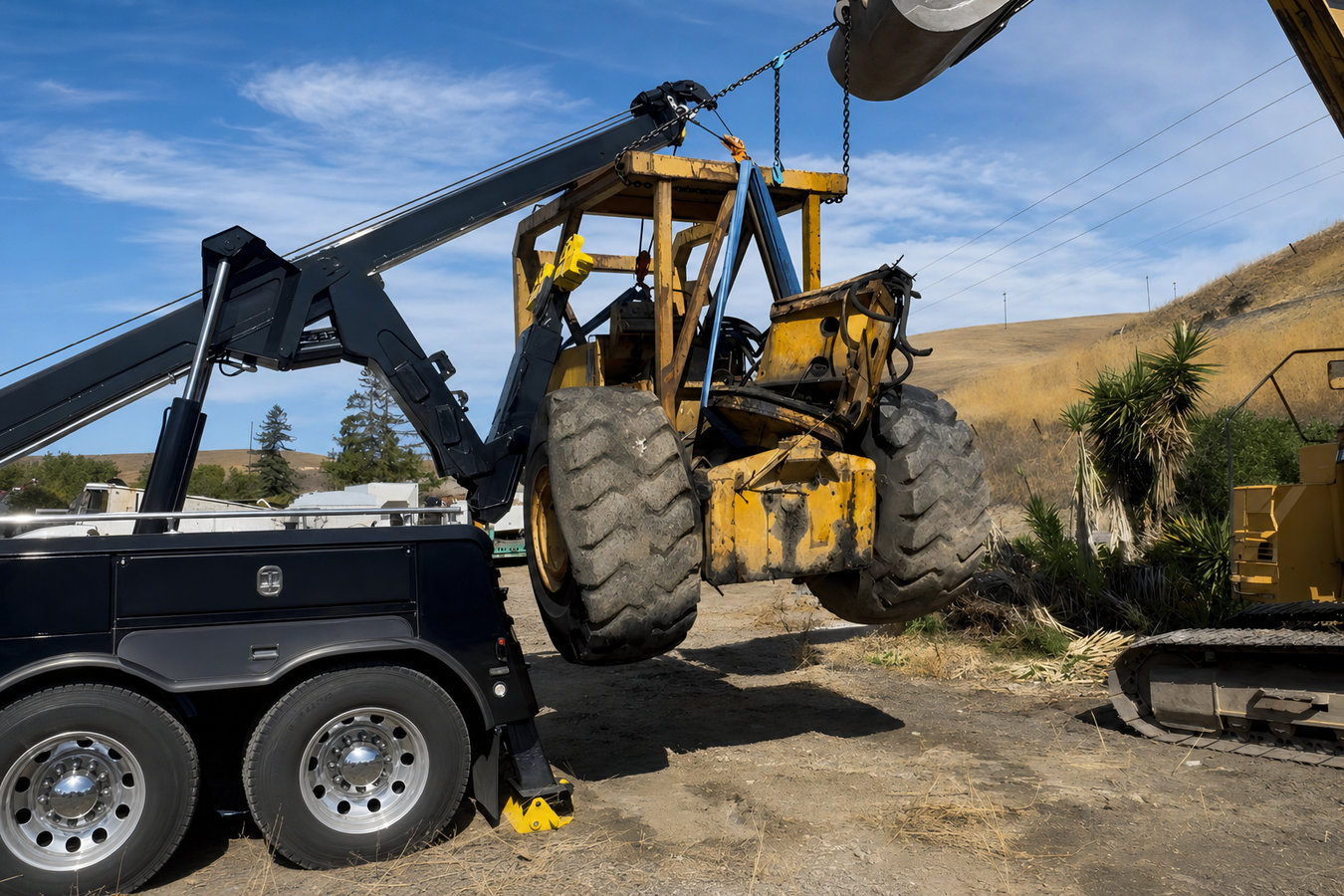
Bulldozers, excavators, forklifts, and oversized industrial machines need specialized transport. We bring the right trailer, the right rigging, and operators who know the East Bay terrain.
Heavy equipment and machinery towing in Lafayette means moving construction machines, industrial equipment, and oversized loads that a standard tow truck cannot handle - using specialized low-boy trailers, heavy flatbeds, and rated rigging to transport the machine safely from pickup to destination, most jobs scheduled within one to two business days of the initial call.
When a piece of equipment breaks down mid-project or needs to move between Lafayette-area job sites, downtime is money. The right provider brings a trailer matched to your machine's weight, handles any permit requirements for the route, and delivers the equipment where it needs to go without damaging it or creating a road hazard.
For machines that are stuck on a slope or cannot be driven onto a trailer, this becomes a recovery situation - which requires winching and rigging capability in addition to transport. If your situation sounds more like a recovery than a straight move, take a look at our roadside assistance and heavy duty towing pages for more context on those scenarios.
An excavator or bulldozer that stops running in the middle of a job site stalls the entire crew. The longer it sits in place, the more time and money the delay costs. Getting it removed quickly - to a repair yard or a staging area - is the fastest way to unblock the project.
Lafayette's hilly terrain means construction equipment sometimes ends up in a spot where it cannot drive out on its own - on a steep grade, in wet soil, or in a corner with no room to maneuver. This is a recovery situation that requires a crew with winching and rigging equipment, not just a flatbed.
As phases of a project shift or work wraps at one address and begins at another, equipment needs to follow. Leaving machines idle at the wrong location costs rental time or ties up owned equipment. A scheduled transport gets your machines where they need to be without disrupting your crew's schedule.
Equipment that exceeds standard road limits in height, width, or weight cannot simply be driven to the next site. Permitted moves require route planning that accounts for the Caldecott Tunnel height restrictions on Highway 24 and any weight-limited roads in the area. A provider who knows this corridor handles the permits and the route.
Our heavy equipment transport covers construction machinery - excavators, bulldozers, graders, skid steers - as well as forklifts, generators, industrial equipment, and other oversized loads. We match the trailer to the machine: low-boy trailers for tall equipment, heavy flatbeds for wide loads, and specialized platforms for machines with unusual dimensions or weight distribution. Every load is secured using rated chains and straps attached at the correct anchor points before the truck moves. For machines that cannot be driven onto a trailer, our operators use winching and rigging to extract and load them safely. If your job also involves a vehicle breakdown or smaller equipment on the same job site, our roadside assistance team can handle that simultaneously.
For loads that exceed standard road limits, we manage the permit process through the appropriate California transportation authorities and plan routes that account for the Caldecott Tunnel clearance restrictions on Highway 24. Permitted moves are scheduled during off-peak windows to keep transit predictable on the I-680 and SR-24 corridors. When the job involves heavy duty towing alongside equipment transport - for example, a support vehicle and a machine both needing to move - we can coordinate both with a single call.
Suits contractors moving excavators, bulldozers, skid steers, and graders between job sites in the Lafayette and Lamorinda area.
Suited to businesses relocating forklifts, generators, compressors, and other heavy industrial equipment to a new facility or repair location.
For machines stuck on slopes, in soft ground, or in positions where they cannot be driven - requiring winching and rigging before transport.
For loads exceeding standard road limits in size or weight, including route planning and permit management for the Highway 24 corridor.
Lafayette and the broader Lamorinda area - Lafayette, Moraga, and Orinda - sit in the Contra Costa hills, where many job sites and private properties are reached by narrow, winding roads with limited turnaround space. Getting a long heavy-equipment trailer in and out of these locations takes operators who know the terrain and plan their approach before they arrive, not after. The Caldecott Tunnel on Highway 24 adds another constraint: tall loads traveling west toward Oakland must fit within the tunnel's height clearance, and anything that does not needs a reroute that adds time and may require additional permits. A provider who works this corridor regularly has handled both situations.
Ongoing residential and commercial development in the area keeps construction equipment moving between job sites on a regular basis, which means experienced local operators have direct familiarity with the common pickup and delivery points, the access challenges, and the permit requirements along the most-traveled routes. Clients in Walnut Creek and Concord across the I-680 corridor also rely on us for heavy machinery moves, so our operators run these routes regularly and know what each job typically requires.
Dispatch will ask for the machine type and approximate weight, pickup and delivery addresses, and site access details. The more you can share, the more accurately we can quote the job and prepare the right equipment. We aim to respond to all new inquiries within one business day.
For loads that exceed standard road limits, we determine whether permits are required and handle the application - accounting for the Caldecott Tunnel clearance on Highway 24 and any weight-restricted roads. We will tell you upfront whether permits apply and how that affects the timeline.
Once the job is scoped and permits are in order, we send the right trailer and crew for your machine's weight and dimensions. We confirm the arrival window with you before dispatch and update you if anything changes.
The crew walks the site, assesses the machine and ground conditions, and loads using proper rigging at the correct anchor points. The load is secured before the truck moves. Transport follows the permitted route, typically during off-peak windows on SR-24 or I-680, with delivery confirmation at the destination.
Tell us about your machine and job site. We will give you a straight answer on trailer type, permits, timing, and cost before anything moves.
(925) 298-0549We run the Highway 24 corridor and the narrow canyon roads above Lafayette regularly. Knowing which loads fit through the Caldecott Tunnel, which routes require permits, and how to position a long trailer on a tight grade comes from doing this work in this specific area - not from a map.
Moving heavy machinery on a trailer not rated for the load is a safety and legal problem. We match the transport platform - low-boy, heavy flatbed, or specialized rig - to your machine's weight and dimensions, and we confirm the equipment before dispatch so there are no surprises at the job site.
Permit applications for oversized loads require knowledge of California transportation authority requirements and local route conditions. We manage that process and include it in the project scope so you are not coordinating separately with Caltrans or local agencies while also trying to manage a job site.
Moving loads that exceed standard vehicle weight limits requires operators with the appropriate commercial driver's license for the weight class. Our operators hold the required credentials, and we operate under proper state and federal FMCSA authority for the commercial work we do. You can ask for proof before work begins - we will have no hesitation providing it.
Contractors and fleet managers in the East Bay who call us regularly get faster response, familiar operators, and no lengthy intake process when something breaks down at the worst moment. Setting up the relationship before you need it is the most practical thing you can do.
On-site help for breakdowns, flats, and jump-starts when your equipment or support vehicles stop moving.
Learn MoreHigh-capacity towing for vehicles and loads that go beyond what a standard wrecker can handle.
Learn MoreEvery day your machine sits in the wrong place costs you time and money. Call now for a straight answer on equipment, permits, and schedule.