Loading...
Serving Lafayette, CA and surrounding areas. (925) 298-0549
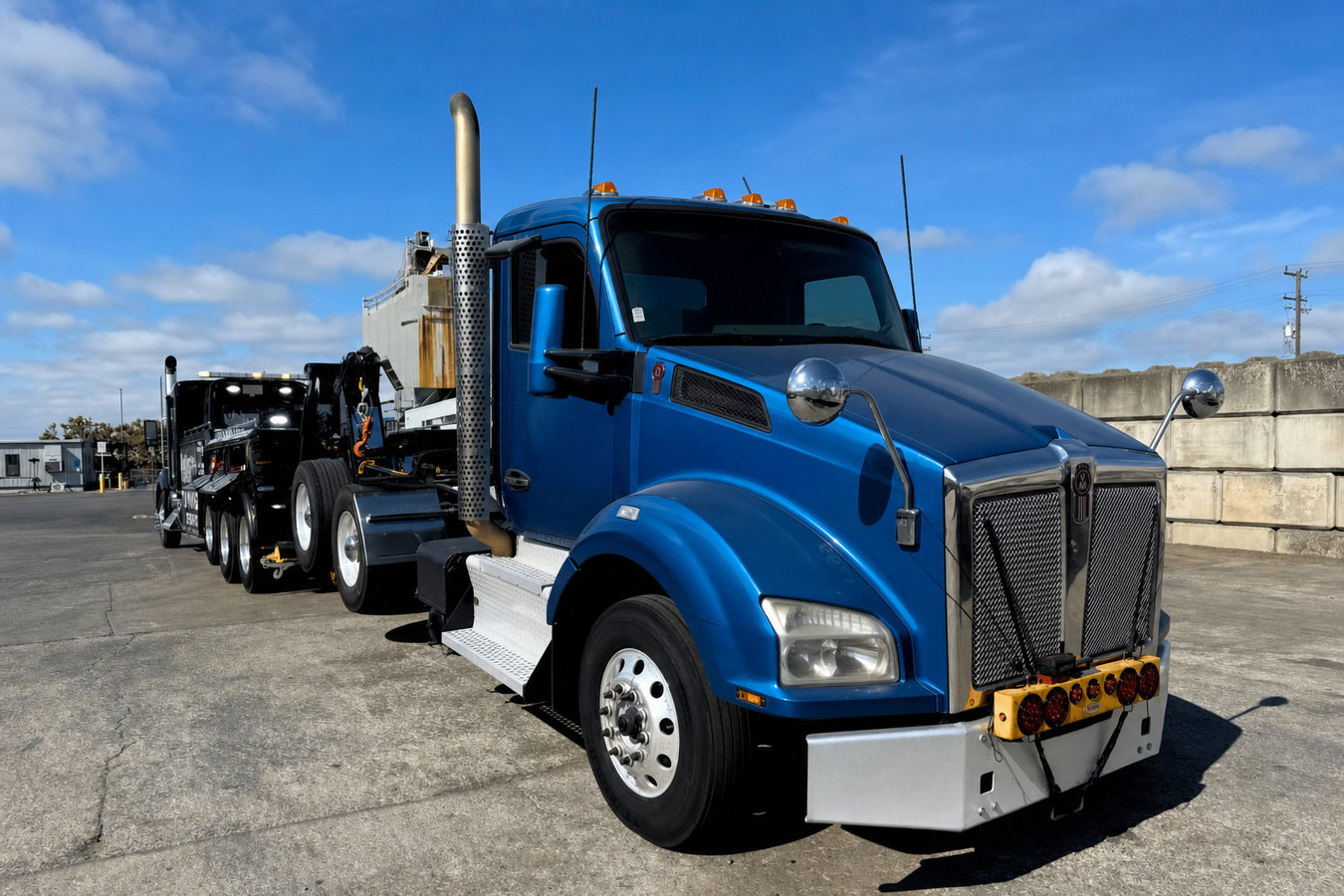
Your commercial rig, RV, or oversized vehicle needs a truck that is actually rated for the job. We match equipment to your weight class and know the I-680 and SR-24 corridors.
Heavy duty towing in Lafayette, CA moves vehicles that a standard tow truck cannot safely handle - semis, large buses, tankers, RVs, and multi-axle commercial rigs - using larger, purpose-built equipment operated by drivers with the training and licensing that weight class requires.
If your rig breaks down on I-680 near the Caldecott Tunnel, or loses power on one of the grades along SR-24, the stakes are higher than a stalled sedan on a side street. Traffic backs up fast, and a heavy vehicle sitting on the shoulder of a busy freeway is a real safety risk. Getting the right equipment rolling quickly matters. For situations where a vehicle has gone off the road and needs to be extracted first, our accident recovery service handles complex extractions before the tow even begins.
The distinction between a tow and a recovery is worth understanding: a tow means your vehicle is disabled but upright and accessible. A recovery means it has to be extracted from a ditch, a rollover position, or off a grade before it can be moved. Both situations require heavy duty equipment - but recoveries take more time and more specialized rigging. When you call, describing the vehicle's position accurately helps dispatch send the right unit the first time.
A commercial truck or RV that breaks down on I-680 or SR-24 is a safety hazard for the driver and for other traffic. A standard tow truck is not rated for the weight. Waiting without the right help increases exposure time on a busy freeway shoulder.
The hilly terrain around Lafayette means a heavy vehicle that leaves the road often ends up on a slope or in a position requiring full recovery, not just a tow. The angle and ground conditions require specialized rigging to prevent the vehicle from shifting during extraction.
A rolled or jackknifed rig cannot be moved with standard equipment. Attempting to tow it without the right rotator or crane-style wrecker risks additional structural damage to the vehicle and danger to operators on scene.
For fleet managers running routes through Contra Costa County, a disabled rig is a direct hit to the schedule. Having the right heavy duty provider on call - one who knows the area and has matched equipment - shortens the disruption window significantly.
Our heavy duty towing covers the full range of large-vehicle situations: straightforward disabled-truck tows, complex off-road recoveries, and loaded-trailer transport throughout the East Bay. For a vehicle that has gone off the road or is in an unstable position, we coordinate accident recovery as part of the same response - one crew, one call, scene to destination. For oversized loads and construction equipment that need specialized transport, our heavy equipment and machinery towing service handles loads that go beyond standard freight configurations.
Every job starts with the same step: confirming what the vehicle is and what position it is in before rolling. That decision - what equipment to send - determines whether the job goes smoothly or turns a recoverable situation into a longer, more expensive one.
Ideal for owner-operators and fleet managers with a vehicle down on the highway that is upright and accessible but cannot be driven.
For vehicles that have left the roadway on a grade or are in a position requiring extraction before transport.
Moves a loaded flatbed, tanker, or freight trailer when the vehicle cannot be driven and offloading is not feasible.
For large recreational vehicles, motorhomes, and oversized personal vehicles that exceed standard tow truck ratings.
Lafayette sits directly along I-680 and just east of the Caldecott Tunnel - one of the most heavily traveled commercial corridors in the East Bay. Heavy trucks, tankers, and commercial rigs move through this stretch constantly. An incident near the tunnel or on the grades approaching it means tight space, significant traffic backup, and coordination with Caltrans and the California Highway Patrol. A provider that has worked incidents on this corridor before is a different resource than one that has not.
The terrain around Lafayette compounds the challenge. State Route 24 runs through rolling hills with grades that can strand a disabled truck in a position requiring careful rigging to prevent movement during recovery. The hilly residential streets above town are narrow and steep - standard tow equipment may not be able to reach a vehicle that has left the road on one of those routes. We serve Walnut Creek and Concord as part of the same Contra Costa County coverage area, so fleet operators running routes through multiple cities have one number for the whole corridor.
Dispatch asks for your location, vehicle type and size, what happened, and any hazards on scene. A fuel leak or a lane blockage near the Caldecott Tunnel changes how urgently the right equipment is sent. We respond within 1 business day for non-emergency inquiries, and immediately for roadside emergencies.
When the operator arrives, the first step is a walk-around - not hookup. They check the vehicle's position, the ground conditions, any slope, and the safest rigging approach. This is especially important on the grades and tight shoulders common along SR-24.
The operator uses the right combination of chains, straps, underlift, or rotator boom based on the vehicle's weight and position. For a loaded trailer or a vehicle on a grade, load distribution gets careful attention so nothing shifts during the lift.
Once secured, the vehicle goes to the destination you specify - your repair yard, a commercial shop, or a storage facility. Confirm the drop-off location with dispatch before the truck leaves the scene, and mention any clearance or weight restrictions on the route.
We respond within 1 business day for non-emergency inquiries - and immediately for active roadside situations. No obligation to submit a request. After you reach out, someone from our team calls to confirm the vehicle details and schedule or dispatch the right equipment.
(925) 298-0549When your rig goes down on I-680 near the Caldecott grades, we confirm the vehicle's weight and configuration before rolling and dispatch the right unit. An undersized truck cannot safely move a loaded tandem, and we do not send one.
The grades, lane configurations, and CHP protocols near the Caldecott Tunnel and along the SR-24 corridor are not the same as a surface-street recovery. Operators who have worked incidents on these routes know how to set up safely and coordinate with traffic control.
California regulates towing rates in certain situations, and we follow those rules. For any privately arranged commercial tow, you receive a clear rate breakdown before the hook goes on. No surprises at drop-off.
You should not have to coordinate multiple companies to get a disabled rig from the side of I-680 to a Contra Costa County repair facility. One point of contact handles the recovery, transport, and drop-off so you can focus on your driver and your schedule.
The WreckMaster certification program sets the standard for towing and recovery training in North America. When evaluating any heavy duty towing provider, asking about operator certifications and the specific equipment they maintain for heavy weight classes is a reasonable starting point.
When a vehicle is off the road, on its side, or needs extraction before it can be towed, accident recovery handles the full process from scene to safe transport.
Learn MoreConstruction equipment, large machinery, and non-self-propelled loads that require specialized platforms and permits for East Bay transport.
Learn MoreDo not wait with a disabled rig on a busy shoulder. Call Lafayette Towing Experts and we will match the equipment to your vehicle and situation - no guesswork, no undersized trucks.